Most advice on sleeping better comes down to two things: the room you sleep in and what you do in the hours before you get into it. This article sets out what NHS guidance says on both, and how to make sensible changes without buying anything expensive.
Why does the bedroom matter for sleep?
The NHS lists a room that is too hot or too cold among the everyday causes of insomnia, alongside stress, noise, irregular hours and too much caffeine or alcohol. In other words, the environment is one of the few contributors that you can usually change yourself, quickly and at little cost.
It helps to be realistic about the strength of the evidence. The NHS advice is practical guidance on sleep habits, often grouped under the term “sleep hygiene”. It is widely recommended as a first step, but it is not a treatment for a long-standing sleep problem. If changing habits has not helped, the NHS points people towards their GP, and towards structured approaches such as CBT for insomnia. Think of the bedroom as the foundation, not the whole building.
Darkness: curtains, eye masks and where your phone sits
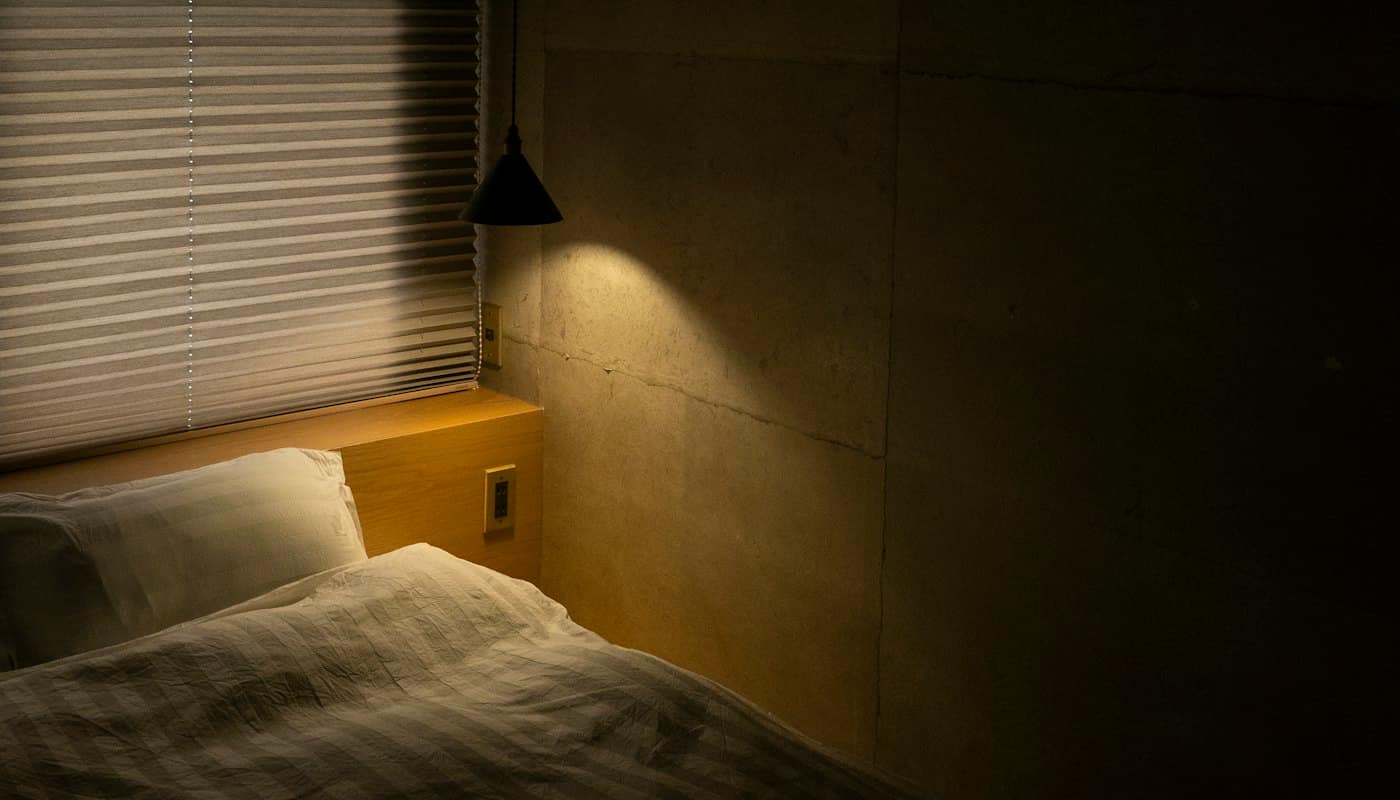
The NHS insomnia page advises making sure the bedroom is “dark and quiet”, using curtains, blinds, an eye mask or ear plugs if needed. The NHS Every Mind Matters page adds some specifics: fully closing curtains to keep the room dark, wearing an eye mask if light is still a problem, and keeping clocks out of view and placing your phone face down to reduce light.
In a city, streetlight and the glow from neighbouring windows are common problems. Practical options include:
- Curtains with a lining, or a blind behind the curtain, if light leaks around the edges.
- An eye mask, which costs little and works regardless of the window.
- Turning the clock to face the wall. Watching the minutes pass tends to make lying awake feel worse.
- Placing the phone face down, on silent, so notifications do not light the room or wake you.
Temperature, noise and the city bedroom
For temperature, the NHS Every Mind Matters page suggests adjusting the temperature or opening a window, if it is safe to do so, to make the room cooler. The NHS does not give a target temperature in this guidance, so any exact figure you see quoted elsewhere is not NHS guidance. A simple rule is to aim for a room that feels comfortably cool rather than warm, with bedding you can add or remove.
Noise is the other big urban factor. The NHS suggests earplugs if noise is a problem, and also mentions background sounds such as rainfall, gentle music or white noise as options. Sleeping with a window open can trade a cooler room for more traffic noise, so you may need to choose which matters more on a given night. Our guide to living with London noise goes further on coping with sound at home.
What to do in the hour before bed
The NHS Every Mind Matters page says: “Try not to use phones, tablets or computers for an hour before bed.” It explains that screen light can make it harder to fall asleep. The NHS insomnia page puts it more broadly, advising people not to watch television or use devices such as smartphones right before going to bed.
The evidence on screens is less clear-cut than the advice sounds. Part of the reasoning is light, but part is simply that scrolling, news and messages keep the mind active. If a full hour feels unrealistic, a smaller change, such as putting the phone away from the bed and switching to a book or radio, is still a reasonable experiment.
Two other NHS suggestions fit this window:
- Write a list. The NHS says that if you often worry in bed, try making a list of things you need to do the next day before you go to sleep. Getting the list out of your head and on to paper is a low-effort way of putting tomorrow’s tasks aside.
- Keep meals lighter. According to the NHS, eating large meals close to bedtime may make it harder to fall asleep.
Caffeine, alcohol and nicotine: which cut-off to use?
The NHS pages differ slightly on timing. The Every Mind Matters page says to try to avoid alcohol and nicotine one to two hours before bed. The NHS insomnia page is more cautious, advising people not to smoke or drink alcohol, tea or coffee at least six hours before going to bed.
These are not contradictory so much as different levels of caution. If you are sleeping well, a shorter gap may be enough. If sleep is already poor, the six-hour guidance for caffeine and alcohol is the safer place to start. For a closer look at how drinks affect the night, see evening drinks and sleep. The NHS also mentions that tea, coffee and some soft drinks contain caffeine, and suggests a warm milky drink or herbal tea as an alternative.
A bedroom and routine checklist
The table below gathers the NHS suggestions covered above in one place.
| Area | What the NHS suggests |
|---|---|
| Light | Close curtains fully; use blinds or an eye mask if needed; keep clocks out of view and phone face down |
| Temperature | Make the room cooler, for example by adjusting the heating or opening a window if safe |
| Noise | Earplugs, or steady background sound such as white noise |
| Screens | No phones, tablets or computers for an hour before bed |
| Caffeine and alcohol | Avoid at least six hours before bed (insomnia page); alcohol and nicotine one to two hours (Every Mind Matters) |
| Timing | Get up at the same time every day; go to bed only when sleepy |
| Activity | Even small amounts help; if evening exercise keeps you awake, be active earlier in the day |
Is a fixed wake-up time really that important?
The NHS Every Mind Matters page says that going to bed and getting up at similar times each day helps your body know when it is time to sleep, and to keep your routine the same when you can, even on days when you are not working. The NHS insomnia page focuses on the wake-up side, advising people to get out of bed at the same time every day.
This is where many people find the biggest gap between advice and habit. A late weekend lie-in feels harmless, but it moves the body’s cues for the following night. A practical compromise is to keep the wake-up time within a reasonable window across the week, rather than aiming for perfection. Consistency is part of the broader case for protecting your sleep.
What if you are still awake after 20 minutes?
The NHS Every Mind Matters page advises that if you are still awake after around 20 minutes, you should get up and sit somewhere comfortable. The NHS insomnia page advises going to bed only when you are sleepy. The idea behind both is to avoid teaching yourself that the bed is a place for lying awake and worrying.
In practice, that might mean moving to a chair with low light, doing something calm and undemanding, and returning to bed when drowsy. Checking the clock repeatedly or reaching for the phone tends to undo the effort. Waking in the small hours has its own causes, which are covered in our article on waking up at 3am.
When to speak to a GP or NHS 111
Bedroom changes are a sensible first step, but they have limits. The NHS advises seeing a GP if:
- changing your sleeping habits has not helped your insomnia;
- you have had trouble sleeping for months; or
- your insomnia is affecting your daily life in a way that makes it hard for you to cope.
Loud snoring with pauses in breathing, or falling asleep unintentionally during the day, are also worth raising with a GP rather than trying to manage alone. If you feel unwell and are unsure what to do, NHS 111 can advise. If low mood or anxiety is keeping you awake, talking to your GP about support is a good step.
A sensible order for making changes
Changing everything at once makes it hard to tell what helped, and it is easy to give up. A gentler order is to start with the cheapest and most reliable items: a consistent wake-up time, a darker room, and the phone placed face down away from the bed. Add a screen-free hour and an earlier caffeine cut-off after a week or two, and keep a brief note of how you feel.
None of these steps is a cure for poor sleep, and the evidence behind each varies. But together they make up the standard first-line advice, they cost little, and they carry almost no risk. If a few weeks of consistent effort do not help, that is useful information in itself and a good reason to book a GP appointment.
General information, not a substitute for advice from a doctor or other qualified health professional. If sleep problems persist, speak to your GP or call NHS 111. If you are struggling emotionally, the Samaritans are available on 116 123.
Sources: NHS; NHS Every Mind Matters