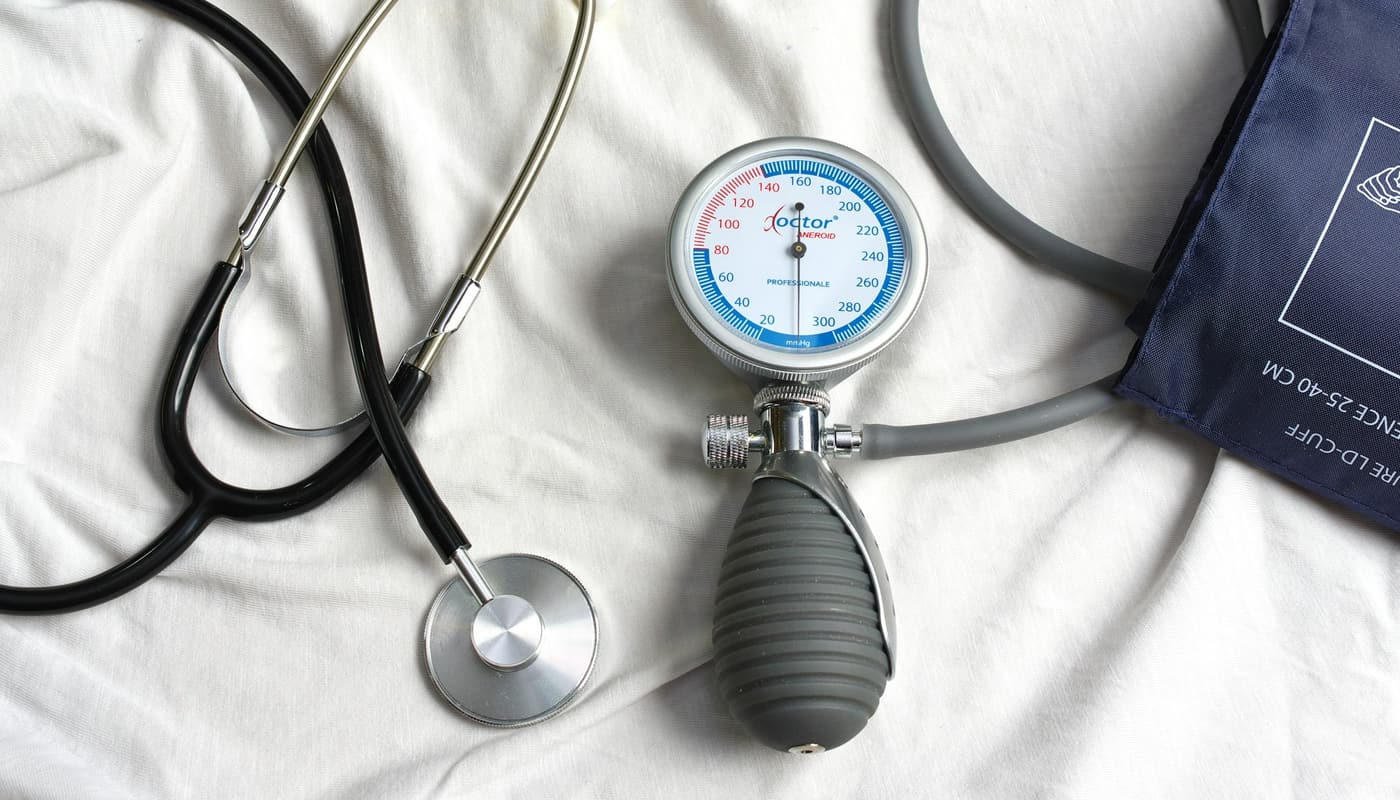

An NHS Health Check ends with a score that estimates your chance of a heart or circulation problem over the next 10 years, usually described as low, moderate or high. That score is an estimate, not a diagnosis, and what follows depends on where you land and on a conversation with the health professional who gave it to you.
This guide picks up where the appointment itself ends. For what is measured on the day, see our piece on what happens at an NHS Health Check and who it is for.
What does the NHS Health Check risk score actually measure?
According to the NHS, the check gives an estimate of your chance of developing heart disease, stroke, type 2 diabetes or kidney disease over the next 10 years. The healthcare professional may describe it as low, moderate or high. Results are usually given during the appointment or soon after.
The cardiovascular part of the score is typically produced by a calculator called QRISK. The British Heart Foundation explains that it uses details such as:
- age, sex, ethnic background and where you live
- whether you smoke, and whether you have obesity
- conditions including diabetes, chronic kidney disease, atrial fibrillation or rheumatoid arthritis
- whether a parent or sibling had coronary heart disease before the age of 60
- whether you take medication for high blood pressure
Your measured blood pressure and cholesterol feed into the picture too, alongside the lifestyle questions asked during the check. The NHS also breaks your results down into separate areas: BMI, blood pressure, cholesterol, alcohol use, physical activity and diabetes risk.
How do the low, moderate and high bands work?
The British Heart Foundation describes the QRISK bands as follows.
| Band | 10-year risk | In plain terms |
|---|---|---|
| Low | Under 10% | Fewer than 10 in 100 people like you |
| Moderate | 10% to 20% | Roughly 10 to 20 in 100 |
| High | 20% or higher | 20 in 100 or more |
A worked example
Illustrative arithmetic: a score of 12% means that if 100 people with the same profile were followed for 10 years, about 12 would be expected to have a heart or circulation event, and about 88 would not. That is 100 minus 12. It does not tell you which group you will be in, and the British Heart Foundation stresses that the score “does not tell you that you will definitely get a cardiovascular disease”.
A low score is not a free pass either. The same source notes that a healthy lifestyle still matters because lifetime risk may be higher than the 10-year figure suggests.
Why might your score go up next time even if nothing has changed?
Age is the biggest driver. The NHS states that everybody’s cardiovascular risk rises with age, so the next time you have a check your score may be higher even if your test results are exactly the same. This catches people out: a rising number five years on does not necessarily mean your habits have worsened.
The NHS also separates risk factors into those you can change and those you cannot:
- Can be changed: smoking, cholesterol and blood pressure.
- Cannot be changed: age, ethnicity and family history.
That split is useful when reading a result. A moderate score driven largely by age and family history leaves less room to move than one driven by smoking and high blood pressure, but in both cases the changeable factors are where effort pays off.
What happens after a moderate or high result?
Everyone is offered a conversation about how to improve their scores. The NHS lists topics such as diet, exercise, weight, stopping smoking, cutting down on salt or alcohol, and lowering cholesterol. You may be referred to local services, such as stop-smoking or physical activity support. If smoking is the main issue, our guide to stopping smoking and what NHS support involves sets out the options.
For higher scores, the British Heart Foundation says a doctor will discuss lifestyle changes with people in the moderate band and may suggest a statin. For the high band, statins and lifestyle changes are typically recommended, and further tests or a referral to a heart specialist may be considered.
The NHS describes statins as medicines for people at higher risk of cardiovascular disease when healthy lifestyle changes have not helped or are unlikely to help on their own. They are available on prescription only. Whether a statin is right for any one person is a decision to make with a doctor, based on the whole picture rather than the score alone. Anyone already prescribed a medicine should talk to a doctor or pharmacist before changing it.
What if your results show something other than a risk score?
The check can also turn up readings that need a closer look, such as blood pressure or blood sugar that is higher than expected. In that case you may be asked to come back for repeat measurements or further tests before anything is diagnosed. A single reading in a clinic is a prompt for follow-up, not a conclusion.
Over-65s are also told about the symptoms of dementia to watch for, because some types share risk factors with heart and blood vessel conditions, and they can be given details of local dementia services.
What are the limits of the score?
The score is a useful guide, but it has boundaries worth knowing:
- It is an estimate over 10 years only. The British Heart Foundation notes a separate lifetime version exists, which matters most for younger people with risk factors who might get a low 10-year score.
- It does not capture everything. According to the same source, QRISK 3 does not fully account for several conditions and treatments now thought to raise risk, including autoimmune conditions, learning disability, COPD, certain cancers, pre-eclampsia, severe mental illness, postnatal depression, immunosuppressant drugs and HIV medicines. If any apply to you, mention them.
- It is not designed for everyone. QRISK is used for people aged 25 to 84 and is not intended for people who already have cardiovascular disease or who take statins for high cholesterol.
- A good result is not a guarantee. The NHS states that having a check does not guarantee you will not get a serious health problem such as heart disease or stroke.
The NHS pages do not give figures on how often checks find problems or how much they improve outcomes, so claims that go further than “it can help spot risk early” are not supported by those pages.
Common mistakes after a health check
- Treating “low” as “nothing to do”. Lifestyle still matters, as noted above.
- Treating “high” as a diagnosis. It is a risk estimate that opens a conversation.
- Ignoring the breakdown. The separate readings for blood pressure, cholesterol, alcohol and activity show where to focus.
- Not asking for your numbers. You can ask for your readings and what they mean, then keep them for comparison at your next check.
- Forgetting the next invitation. Eligible adults aged 40 to 74 without listed conditions are invited about every five years, according to the NHS. Access depends on your GP practice or local council offering it, so ask if you are not contacted.
When to speak to a GP or NHS 111
Warning signs such as high blood pressure and high cholesterol often cause no symptoms, which is why the check exists. Speak to your GP practice if you have questions about your results, if you think you were given inaccurate information, or if a condition not captured in the score may apply to you. Contact NHS 111 for advice if you have concerns about side effects from a medicine, and call 999 for sudden chest pain, signs of a stroke or other emergencies.
Making use of your result
The most helpful way to treat a Health Check score is as a starting point. It condenses several readings into one number, tells you roughly where you stand, and points to the factors you can influence. Keep a copy of your results, note the date, and use them to compare with your next check rather than to judge yourself.
This is general information, not a substitute for advice from a doctor or other qualified health professional. If you are worried about your results or your health, speak to your GP or call NHS 111.
Sources: NHS; British Heart Foundation