The clocks go back one hour in the early hours of Sunday 25 October 2026, and for most people that means an extra hour in bed on one night. This guide explains why an hour can still unsettle sleep for a few days, and which ordinary habits help.
What happens on the night of 25 October
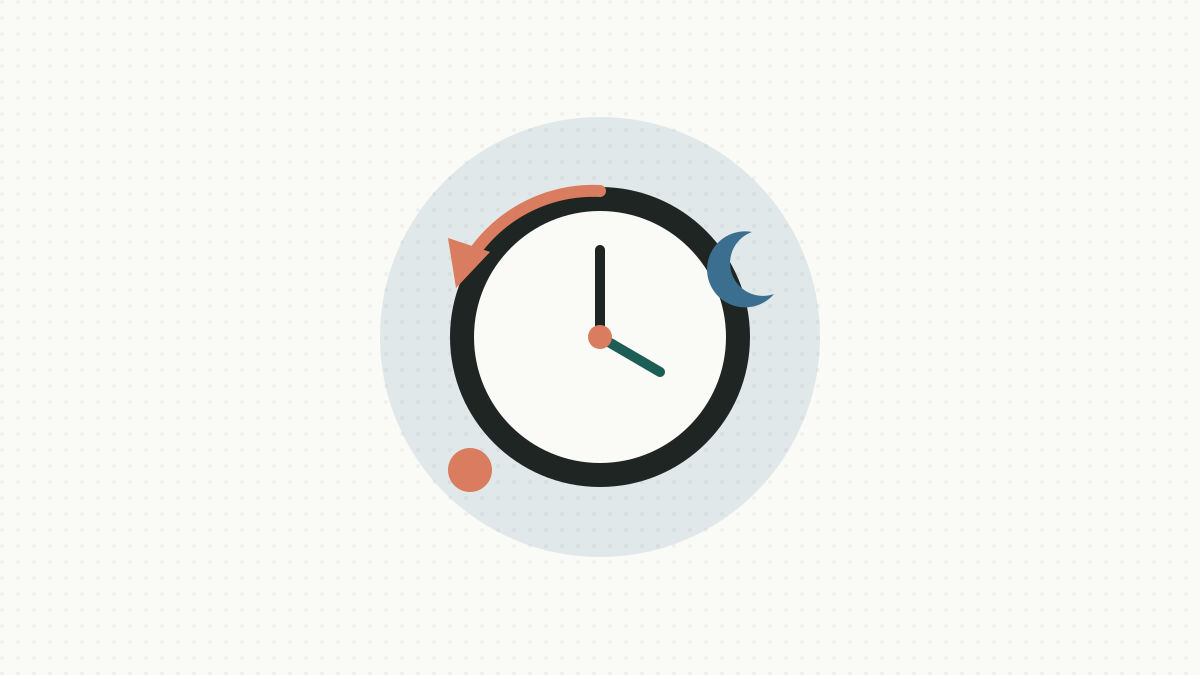
According to the UK government, the clocks go back on Sunday 25 October 2026 at 2am, when 2am becomes 1am and the UK returns to Greenwich Mean Time (GMT). The clocks went forward on Sunday 29 March 2026, at 1am, into British Summer Time (BST).
In practical terms, that makes Saturday night into Sunday morning an hour longer than usual. Phones and most computers update themselves, but cookers, car clocks, some watches and wall clocks usually need changing by hand, so it is worth doing that before bed rather than discovering the mismatch on Sunday morning.
Why does an hour make a difference?
The NHS explains that going to bed and getting up at similar times each day helps your body know when it is time to sleep. A clock change moves the world around you by an hour while your internal rhythm stays where it was, at least for a while.
Illustrative arithmetic shows the effect. Suppose you normally go to bed at 11pm BST and wake at 7am BST. The first evening on GMT, 11pm on the new clock feels to your body like midnight on the old one, so you may not feel sleepy at the usual time. In the morning, a 7am alarm feels like 8am to your body, so waking is often easier than usual. Over the following days, the body gradually lines up with the new clock.
| Time on the new (GMT) clock | What it feels like to a body still on BST |
|---|---|
| 7am wake-up | 8am |
| 6pm dinner | 7pm |
| 11pm bedtime | midnight |
Autumn is widely seen as the gentler of the two changes because you gain an hour rather than lose one, but the same principle applies: a rhythm that has been set for months takes time to move.
What the evidence does and does not show
Researchers have studied clock changes in sleep medicine and epidemiology, including systematic reviews published in recent years. The reviews listed in the PubMed database look at both sleep and wider health outcomes, and one of them describes both beneficial and adverse effects of daylight saving time. The details of individual findings are not something this article can summarise with confidence, so it does not quote figures from them.
What can be said plainly is that the advice for settling after a clock change is not specialist or experimental. It is the same everyday sleep guidance the NHS gives all year round, applied a little more deliberately for a few days. That guidance is well established, though it rests on general principles about sleep routines rather than on a trial of a specific “clock change plan”.
A steady routine in the days around the change
The most consistent NHS message is regularity. The NHS advises going to bed and getting up at similar times each day, and keeping the routine the same when you can, even on days when you are not working.
For 25 October, that suggests a simple approach:
- Keep to the new clock time. From Sunday, aim for your usual bedtime and wake time by the clock on the wall, rather than by what your body insists it is.
- Do not make up for the extra hour with a lie-in. A late start on Sunday pushes the whole rhythm later, which can make Sunday night harder.
- Relax before bed. The NHS suggests relaxing for at least 1 hour before bed.
- Keep the wind-down familiar. The same sequence each night, such as a warm drink, dimmed lights and a book, gives your body cues that sleep is coming.
If you wake early on Sunday because your body thinks it is later, try to stay in bed quietly. It is a short-term quirk, not a sign that something is wrong.
Does daylight really help you adjust?
Light is the main outside cue for the body clock, and in the UK the change brings darker evenings and, for a few weeks, lighter mornings. The NHS advice for seasonal low mood is to get as much natural daylight as you can and try to go outside in the daytime every day. That advice is written for seasonal affective disorder, not for clock changes specifically, but it is a sensible habit for the darker months generally. Our guide to seasonal affective disorder and what helps covers when low mood in autumn and winter deserves attention.
In the evenings, the NHS advises avoiding phones, tablets and computers for an hour before bed, because blue light from screens can make it harder to fall asleep. Fully closing curtains, keeping clocks out of view and placing your phone face down can help with a bedroom that is lighter than you would like.
Caffeine, alcohol and the evening routine
When sleep feels slightly off, it is tempting to lean on coffee by day and a drink at night. The NHS cautions against both. Caffeine’s effects can last up to 7 hours, so the NHS advises avoiding it in the evening if sleep is a problem. The NHS also says alcohol makes sleep less deep, so you can feel tired the next day even after 8 hours. In its insomnia advice, it suggests avoiding smoking, alcohol, tea and coffee at least 6 hours before bed, and avoiding exercise in the 4 hours before bed.
Gentle activity earlier in the day is a better ally. The NHS notes that a single 15-minute walk can boost energy, and that regular activity reduces tiredness over time. If exercise close to bedtime affects your sleep, try being active earlier in the day.
What about naps?
A short nap can feel like the obvious answer to a groggy Monday, but the NHS advice on tiredness is to avoid daytime naps when you are trying to improve night-time sleep. Our piece on when naps help and when they make sleep worse sets out the trade-offs.
Who may find the change harder?
Some people notice the shift more than others. Anyone whose sleep is already fragile, including people living with insomnia, may find the first few nights less settled. If your sleep struggles run deeper than a clock change, see insomnia: when to get help and what CBT for insomnia involves. Households with young children or with people who have dementia may find routines matter even more, and a calm, predictable evening is a reasonable aim, though general NHS sleep guidance does not single out those groups.
In the bedroom, the NHS recommends a room that is quiet, dark and cool, with earplugs or background sounds if noise is a problem. Our look at living with London noise has more ideas for city sleepers.
When to speak to a GP or NHS 111
A few unsettled nights after a clock change are normal and usually pass. The NHS says to see a GP if changing your sleep habits has not helped, if you have had trouble sleeping for months, or if your insomnia makes it hard to cope with daily life. The NHS also advises seeing a GP if tiredness that rest and sleep do not relieve keeps going, as it may point to an underlying condition.
If low mood that comes with the darker months is affecting your daily life, speak to a GP. If you feel unable to cope or are in distress, NHS 111 can advise on where to turn, and the Samaritans are available any time on 116 123. Pharmacy sleep aids, according to the NHS, may help for 1 to 2 weeks at most, and it advises checking with your doctor before taking one.
A calm plan for the weekend
The change is small and temporary, and the response can be small too. Alter the clocks that will not change themselves, keep your usual bedtime and wake time by the new clock, step outside in daylight each day, ease off caffeine and alcohol in the evening, and give yourself a quiet hour before bed. If sleep stays poor beyond a short adjustment, that is a reason to talk to a health professional rather than to keep tolerating it.
General information, not a substitute for advice from a doctor or other qualified health professional. If you are worried about your sleep or mood, speak to your GP or call NHS 111. If you need to talk to someone, the Samaritans are on 116 123.
Sources: GOV.UK; NHS; PubMed